
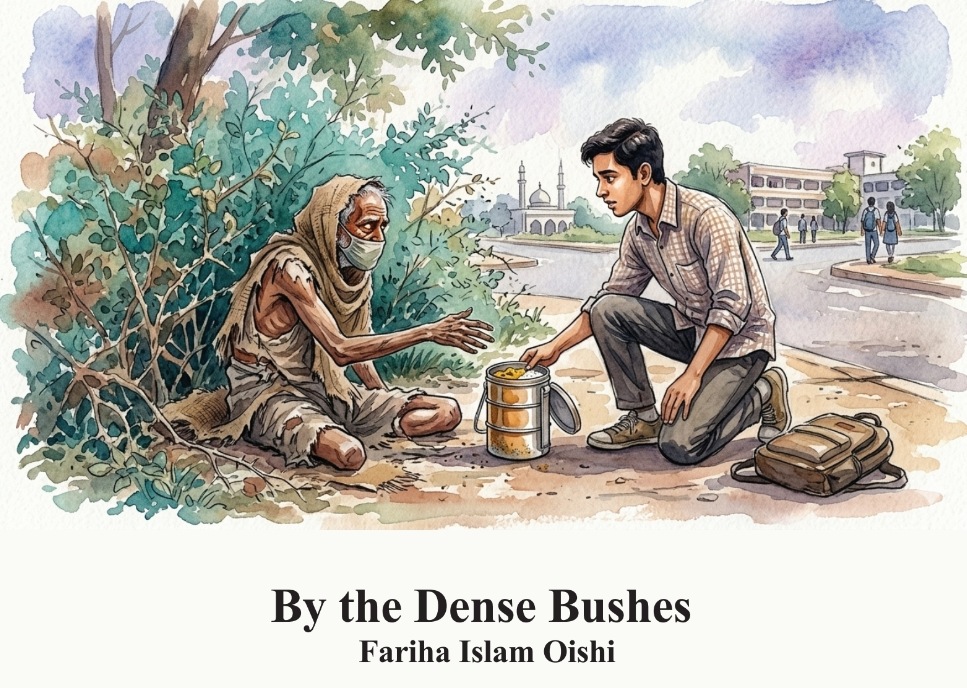
“No, Ma, there’s no time to eat now—just hand me my tiffin box,” Ali said, slipping on his shoes. His college day began at eight, yet the inertia of morning sloth still clung to him. He would only wake when his mother called, then quickly gobble something down or leave on an empty stomach. His mother had already launched into a scolding, but Ali had no time to listen. He rushed down the stairs. It had only been two months since college began, and already the pressure of studies was immense. Where was the time to truly “chill”? Ali sighed, lost in thought. Some of his friends had started coaching for every subject, but he simply couldn’t endure such a rat race. He aimlessly kicked a small brick lying on the street, sending it skittering away. It was then, near the three-way intersection by the dense bushes, that his eyes fell upon it—an odd, sack-like object lying there. A sharp spike of curiosity hit him, but as he glanced at his watch, he jumped in alarm. He was sure to be late for college, and the first class was with Sir Rakib—meaning a full period standing outside, enduring the mocking glances of nearby students. The chance to satisfy his curiosity was, once again, denied. Fate, however, seemed to smile on him that day. Mr. Rakib was on leave, and Ali found himself wishing the teacher would extend his vacation.
As he slid his bag onto the bench next to Noor, he offered a wide grin. “What are you muttering about, man? Did a jinn possess you?” Noor asked, raising an eyebrow. “Nah, buddy, I’m just sick of it all,” Ali sighed, his smile fading. “This academic pressure is completely draining the life out of me.” “Tell me about it,” Noor agreed, rubbing his temples. “Lately, everything has been flying right over my head.” The classes, as usual, were a tedious blur. Ali couldn’t fathom the relevance of studying the life cycle of a rohu fish. He felt smaller than an insect, his mind heavy with existential boredom.
With slow, dragging steps, he began his walk home. His eyes drifted again toward the clump of overgrown bushes by the roadside. The object that had piqued his curiosity that morning was still there, exactly as before. Gathering his courage, Ali approached the spot. He had to know what the bundle—covered in tattered, ripped rags—really was. It looked like someone had dumped a pile of old clothes, and beneath them, some sort of creature lay curled up. As he drew nearer, the bundle suddenly trembled. The sound of Ali’s footsteps made it attempt to turn over, and in the very next moment, Ali leaped back in terror. “That… that’s a person!” he tried to shout, but the sound caught in his throat. “But who is he, and how did he get like this?” he whispered, his voice trembling. The figure, wrapped in burlap and shredded cloth, looked like a monstrous beast from a distance. Its eyes glowed intensely as it stared at Ali, its face partially hidden behind a dirty mask. Using one hand for support, the person slowly stretched the other hand toward him. Both legs were amputated below the knee. Ali instinctively stepped back. The man’s gaze seemed to carry the fierce glint of a wild animal, and he uttered a muffled groan, trying to communicate something. Seeing Ali’s fear, the man stopped moving.
Ali paused and took a shaky breath. He began to understand. The man wasn’t trying to attack; he was reaching out, asking for help. He brought his hand to his mouth, clearly indicating that he was hungry. The intensity in his eyes wasn’t savagery, but a desperate, helpless plea for survival. Suddenly, the weight of the academic world—the tedious life cycle of the rohu fish and the overwhelming pressure of exams—vanished. His own complaints of boredom and exhaustion felt hollow against this raw struggle to live. Compassion, sharp and undeniable, replaced his fear. The man, his gaze now steady yet vulnerable, remained still, letting Ali decide. Slowly, Ali reached into his bag and pulled out the tiffin box his mother had prepared. It was warm, fragrant, and a symbol of everything he had taken for granted: a roof, a bed, a meal, a mother’s care. Ali knelt on the pavement—not too close, but close enough. He opened the box and gently pushed it forward. The man’s eyes softened instantly. He reached for the food with slow, almost reverent movements. Ali watched him eat, noticing how the intensity of despair was replaced, even if briefly, by the quiet dignity of relief.
In that silent moment, a profound truth settled over him. He had been obsessing over what he lacked—freedom and relaxation—while ignoring the privileges he already had. Ali waited until the man finished eating. As he took the box back, their fingers brushed—a brief, startling contact between two worlds—and in that moment, Ali knew what to do. He reached for his worn phone, his fingers still shaking, and dialed the number of his local mosque’s relief committee—a number his mother had taught him. “Assalamu alaikum,” he stammered, his heart pounding, “I found someone near the college intersection. He needs permanent help. He has no legs and is living in terrible conditions. Please do something.” They promised to come the next morning. Ali didn’t stop there; he called Noor and said, “Forget the homework, man. Come to my house tomorrow morning. A life needs our help. It’s urgent.” He hung up, his heart calmer now, filled with purpose instead of panic.
Ali stood up, looked at the man one last time, and offered a silent promise through his eyes. He had nothing more to give today, but he had committed himself to doing more. He walked the rest of the way home, quietly opened the door, and placed the tiffin box on the counter. The metal was still faintly warm, but now he noticed tiny specks of dust clinging to its edges—dust from the roadside, from where the man had been lying. He could wipe the dust away, but the memory—the life-altering truth he had witnessed—would remain forever, etched deeply into his soul. Ali realized he had not only shared his food, but also his world. In return, the man had taught him that life is not about what we lack, but about recognizing the value of what we already have. Ali knew he had learned more from that roadside encounter than weeks of classroom lessons could ever teach him. And this was not the end—he would return the next day. His true education had just begun.
Class: 11 Group: Science, Govt. Edward College, Pabna.

 মানব সৃষ্টির রহস্য: আল কুরআনিক পর্যালোচনা, মোঃ শামীম হোসাইন
১৭১৮ views
মানব সৃষ্টির রহস্য: আল কুরআনিক পর্যালোচনা, মোঃ শামীম হোসাইন
১৭১৮ views
 কাঠের বাক্সো , এস. এম. ফরিদ , সহযোগী অধ্যাপক, রসায়ন
১৬৯২ views
কাঠের বাক্সো , এস. এম. ফরিদ , সহযোগী অধ্যাপক, রসায়ন
১৬৯২ views
 রুপপুর পারমানবিক চূল্লী , প্রফেসর মোঃ লুৎফর রহমান
১৬৭৩ views
রুপপুর পারমানবিক চূল্লী , প্রফেসর মোঃ লুৎফর রহমান
১৬৭৩ views
 মাননীয় সংসদ সদস্য পাবনা ৫ এর বাণী
৮৭৪ views
মাননীয় সংসদ সদস্য পাবনা ৫ এর বাণী
৮৭৪ views
 সম্পাদকীয়
৬৬৫ views
সম্পাদকীয়
৬৬৫ views
 সবচেয়ে বড় সৎ মানুষ ,মোঃ নাজমুল হক , সহযোগী অধ্যাপক, ইংরেজি
৬২৬ views
সবচেয়ে বড় সৎ মানুষ ,মোঃ নাজমুল হক , সহযোগী অধ্যাপক, ইংরেজি
৬২৬ views
 কবি ওমর আলীর ‘রুদ্ধ নিশ্বাসে ছিলাম নয় মাস’ : একটি পাঠ পর্যালোচনা, তুষার কুমার সরকার, সহযোগী অধ্যাপক, বাংলা
৪২৬ views
কবি ওমর আলীর ‘রুদ্ধ নিশ্বাসে ছিলাম নয় মাস’ : একটি পাঠ পর্যালোচনা, তুষার কুমার সরকার, সহযোগী অধ্যাপক, বাংলা
৪২৬ views
 এডওয়ার্ড কলেজ অ্যালবাম ১
৩৬৩ views
এডওয়ার্ড কলেজ অ্যালবাম ১
৩৬৩ views
 শিক্ষা প্রতিষ্ঠানে সাম্প্রদায়িক সম্প্রীতি, মোঃ রাকিবুল ইসলাম রাকিব
২৯৬ views
শিক্ষা প্রতিষ্ঠানে সাম্প্রদায়িক সম্প্রীতি, মোঃ রাকিবুল ইসলাম রাকিব
২৯৬ views
 শিকড় ,মোঃ সুলতান মিয়া,প্রভাষক, ইংরেজি বিভাগ
২৮৫ views
শিকড় ,মোঃ সুলতান মিয়া,প্রভাষক, ইংরেজি বিভাগ
২৮৫ views
 একটি গান, একজন স্বৈরাচার পতনের হাতিয়ার, তারেক মাহমুদ
২৩৫ views
একটি গান, একজন স্বৈরাচার পতনের হাতিয়ার, তারেক মাহমুদ
২৩৫ views
 নির্বাচিত কবিতা সংকলন
২২৮ views
নির্বাচিত কবিতা সংকলন
২২৮ views
 The Sailor of the Seven Seas , translated by Noor-E-Alam
২১২ views
The Sailor of the Seven Seas , translated by Noor-E-Alam
২১২ views
 Why This Pain? ,Md. Sayeeful Islam Razu
২০৯ views
Why This Pain? ,Md. Sayeeful Islam Razu
২০৯ views
 শিকড়হীন, ড. মোঃ শফিকুল ইসলাম
২০৮ views
শিকড়হীন, ড. মোঃ শফিকুল ইসলাম
২০৮ views
 সবুজের মায়ায় শ্রীমঙ্গল : একটি অবিস্মরণীয় আনন্দভ্রমণ, শাহরিয়ার হোসেন প্রীতম
১৯৯ views
সবুজের মায়ায় শ্রীমঙ্গল : একটি অবিস্মরণীয় আনন্দভ্রমণ, শাহরিয়ার হোসেন প্রীতম
১৯৯ views
 বাংলাদেশের প্রাণে বোনা লোকসংস্কৃতি, মো. আলাউদ্দিন হোসেন
১৯৭ views
বাংলাদেশের প্রাণে বোনা লোকসংস্কৃতি, মো. আলাউদ্দিন হোসেন
১৯৭ views
 অরুন্ধতী রায়ের The God of Small Things : একটি পর্যালোচনা
১৯৬ views
অরুন্ধতী রায়ের The God of Small Things : একটি পর্যালোচনা
১৯৬ views
 **Department of Political Science**, Professor Md. Abdul Hamid
১৮৮ views
**Department of Political Science**, Professor Md. Abdul Hamid
১৮৮ views
 আমরা, মোঃ তাহিদুল হক
১৬২ views
আমরা, মোঃ তাহিদুল হক
১৬২ views
 যে চিঠি দেবো বলে অপেক্ষায়, আতিক শাহরিয়ার
১৬২ views
যে চিঠি দেবো বলে অপেক্ষায়, আতিক শাহরিয়ার
১৬২ views